
Celebrating What Matters: Our 2025 Holiday Giving

As we close out another remarkable year at Future Forwarding, we find ourselves reflecting not just on business milestones, but on the relationships and values that define who we are. Success isn’t measured solely by the deals we close or the projects we complete—it’s measured by the positive impact we create in the communities we serve.

This holiday season, we’re honored to continue our tradition of giving back by supporting three exceptional organizations making a profound difference across Georgia. Each charity represents a cause that resonates deeply with our team and embodies the spirit of service we strive to uphold every day.

Supporting Georgia’s Most Vulnerable

Our 2025 charitable giving focuses on three pillars: children’s health, family stability, and compassionate animal welfare. These aren’t just causes we admire from a distance—they’re organizations doing the hard, transformative work that changes lives.

Children’s Healthcare of Atlanta: Healing Georgia’s Future

When a child faces a serious medical challenge, an entire family’s world shifts. Children’s Healthcare of Atlanta stands as Georgia’s only freestanding pediatric healthcare system, providing specialized care that families can’t find anywhere else in the state.

With over 1 million patient visits annually across all 159 Georgia counties, CHOA brings together more than 60 specialized programs under one mission: to make kids better today and healthier tomorrow. From lifesaving cancer treatments to pioneering research that will benefit children nationwide, this organization represents hope for families during their most difficult moments.

Why we support them: Every child deserves access to world-class healthcare, regardless of their family’s circumstances or where they live in Georgia.

Bloom: Building Stronger Families for Foster Children

Georgia’s foster care system serves thousands of vulnerable children who’ve experienced trauma, displacement, and uncertainty. Bloom stands as one of the state’s leaders in transforming their futures, providing support, resources, and placements for more than 7,800 children each year.

This remarkable organization doesn’t just place children in foster homes; they empower entire communities to transform young lives. Through comprehensive training programs, The Bloom Closet (which provides essential clothing and supplies), and ongoing support for foster families, Bloom ensures that children have more than just a roof over their heads—they have the resources, dignity, and support they need to thrive.

Why we support them: Every child deserves stability, and every foster family deserves the tools and support to provide it.

Coco’s Cupboard: Compassion for Those Who Can’t Speak for Themselves

In the southern crescent of Atlanta, abandoned and neglected animals face uncertain futures. Coco’s Cupboard fights for every single one of them.

This volunteer-driven nonprofit humane society does more than rescue dogs and cats—they prevent future suffering through low-cost spay/neuter programs, provide critical resources through their pet food pantry, and train service dogs that transform the lives of veterans and individuals with disabilities. It’s a holistic approach to animal welfare that recognizes the deep connection between human and animal wellbeing.

Why we support them: Compassion knows no boundaries, and those who serve our country and community deserve the independence and companionship these service dogs provide.

An Invitation to Join Us

While we’re proud to support these organizations on behalf of our business partners, we know that lasting change requires community-wide commitment. If any of these causes speak to you, we encourage you to learn more:

Looking Forward

As we enter the new year, we’re grateful for the partnerships that make our work possible and meaningful. To our clients, collaborators, and friends: thank you for allowing us to serve you and for joining us in creating positive change.

Here’s to a holiday season filled with compassion, a new year full of possibility, and a continued commitment to lifting up those who need it most.


From all of us at Future Forwarding, we wish you and your loved ones a joyful holiday season and a prosperous 2026.
SEA-AIR SERVICES

Understanding SEA-AIR Services from Asia: Fast and Cost-Effective Shipping Solutions

For importers and exporters shipping goods from Asia, balancing speed and cost is always a challenge. Air freight is fast but expensive, while sea freight is economical but slow. That’s where SEA-AIR services come in. At Future Forwarding, we offer SEA-AIR solutions designed to give you the best of both worlds: faster transit than sea freight and lower costs than air freight.

What is SEA-AIR?

SEA-AIR, sometimes written as SEAIR or SEA AIR SERVICE, is a combined logistics solution. It involves transporting goods by sea for the long-haul portion of the journey. Then it is followed by air freight for the final leg. Typically, shipments leave Asia via container ships to a major hub. From there, we fly them to their final destination. This hybrid method helps reduce shipping time without incurring the high costs of sending the entire cargo by air.

Why Choose SEA-AIR Services from Asia?

Asia remains a global manufacturing hub, supplying everything from electronics to textiles. Exporting from countries like China, Vietnam, or India, SEA-AIR offers several advantages:

Simplified Logistics: Using a single service for both sea and air segments reduces the complexity of managing multiple carriers, documentation, and customs clearances.

Cost Efficiency: Shipping by sea for the majority of the route keeps your freight charges lower than full air freight, making it ideal for products that are time-sensitive but not urgent.

Faster Transit: SEA-AIR can cut delivery times by up to 30 percent compared to traditional sea freight, meaning your products reach customers faster.

Flexible Scheduling: With multiple shipping schedules and flight connections, SEA-AIR services allow more flexibility than standard sea or air options alone.

How SEA-AIR Works

The process is straightforward. Goods are collected at the supplier in Asia and shipped via container vessels to a designated hub, often in Europe or the United States. Once at the hub, cargo is transferred to an aircraft for the final delivery. This approach is particularly useful for consolidated shipments, less-than-container-load (LCL) cargo, or high-volume products where timing and cost are both critical.

Services You Can Expect

At Future Forwarding, our SEA-AIR service from Asia comes with full support:

End-to-End Logistics: From initial collection in Asia to final delivery anywhere globally, our team ensures your cargo is managed efficiently.

Customs Brokerage: We handle customs documentation and clearance so your shipment moves smoothly across borders.

Warehousing: Temporary storage options at sea hubs and airports to accommodate timing and consolidation needs.

Online Tracking: Real-time shipment updates give you full visibility of your cargo from departure to delivery.

Who Should Use SEA-AIR Services?

SEA-AIR is perfect for businesses that need faster delivery than sea freight but cannot justify full air freight costs. Typical users include electronics manufacturers, fashion brands, and consumer goods exporters. If your cargo is time-sensitive, but budget is important, SEA-AIR is the ideal solution.

Conclusion

SEA-AIR is a practical, efficient, and cost-conscious option for moving goods from Asia to destinations around the world. By combining the strengths of sea and air freight, this service ensures your shipments arrive faster without the premium of air freight. At Future Forwarding, we offer comprehensive SEA-AIR solutions that include customs brokerage, warehousing, and online tracking, giving you peace of mind and full control over your supply chain.

To explore our SEA-AIR services from Asia and find the best shipping solution for your business, contact the Team for advice

European Port Outlook

Date: November 27, 2025

European port congestion remains a challenge this week, especially at major Northern-European hubs where yard utilisation and vessel delays continue to affect cargo flows

Over the coming month, congestion at Northern European ports is expected to persist, with Rotterdam and Antwerp remaining the most critical points. Yard utilisation is likely to stay high (80–90% at the busiest terminals), while Hamburg and Bremerhaven may see moderate pressure (70–85%). Delays in vessel berthing, container handling, and inland transport are possible, and the risk of cargo rollovers remains elevated at the busiest hubs. Seasonal cargo peaks, weather events, and diverted volumes could exacerbate congestion. Planning ahead, confirming bookings early, and considering alternative ports or feeder services will be key to keeping shipments on track.

Current Situation

PORTCONGESTION LEVELNOTES
Antwerp🔴 HighCritical terminals 85–90% yard utilisation, risk of skipped calls/rollovers
Rotterdam🔴 HighYard ~80–85%, absorbing diverted cargo, berth waiting times possible
Hamburg🟠 MediumYard 70–75%, moderate delays, inland transport pressure
Bremerhaven🟠 MediumYard 80–85%, transshipment flows, moderate dwell times
Other Northern Ports🟡 Low–MediumPotential overflow capacity, but rising utilisation possible

Managing European Port Congestion

  • Expect possible delays and longer container dwell times.
  • Consider alternative ports or feeder services to reduce risk.
  • Confirm bookings and schedules with carriers early.
  • Communicate with Future Forwarding to adjust plans proactively.

European port congestion is likely to persist in the near term. Proactive planning and close monitoring of yard utilization and vessel schedules are key to minimizing disruptions and maintaining a smooth supply chain.

EU to End Duty-Free Small Parcel Imports: What It Means for Cross-Border E-Commerce and Global Shippers

The European Union has approved a significant change to its customs framework by voting to end duty-free treatment for small parcels. Beginning in 2028, and dependent on the successful rollout of a centralized EU customs data hub, the bloc will eliminate the current €150 de minimis threshold that allows small e-commerce packages to enter without paying duties. EU officials also intend to put a temporary collection mechanism in place as early as 2026.

This decision reflects rising concerns among policymakers about the impact of small-parcel imports on fair competition and customs oversight. Direct-to-consumer shipments from online platforms have surged, and authorities estimate that up to 65% of small parcels entering the EU are undervalued. Last year, 91% of parcels valued under €150 originated from China. Ending the threshold is projected to generate $1.2 billion annually in customs revenue.

The move also aligns the EU more closely with recent U.S. actions. The United States—already holding a higher $800 de minimis threshold—has revoked favorable treatment for low-value shipments from China and, more recently, for parcels from all countries. Following these changes, many large e-commerce sellers have shifted inventory into ocean containers and now fulfill orders from domestic warehouses.

For global shippers, the EU’s decision signals a clear shift toward tighter controls on parcel-based e-commerce flows. Importers and exporters should expect increased compliance scrutiny, evolving cost structures, and more complex operational planning as both the EU and U.S. move away from wide de minimis exemptions in favor of more uniform duty collection.

If your business needs to prepare for new duty requirements or adjust parcel-based shipping models, Future Forwarding is ready to help you build a resilient, forward-looking plan.

Tariff Authority on Trial: How the Supreme Court Decision Could Reshape Global Trade

A major Supreme Court decision now underway could redefine how U.S. trade policy is made — and how quickly tariffs can change. The case challenges tariff authority, whether the President can impose sweeping tariffs without congressional approval, a question that holds major consequences for importers and exporters worldwide.

Future Forwarding’s teams in the United States and United Kingdom are closely monitoring the proceedings. With supply chains spanning multiple jurisdictions, any ruling that alters tariff authority could affect customs procedures, duty classifications, and shipment planning across major ports and trade lanes.

What’s Happening

The Court heard arguments in early November and is expected to rule before year-end. The outcome may preserve current executive powers, restrict them, or create a middle ground that leaves regulators scrambling to adjust. Each possibility carries implications for businesses managing U.S.–Asia and transatlantic flows.

What It Could Mean

  • If powers are limited: Some tariffs may need new authorization, potentially reducing rates or prompting reclassification.
  • If powers are upheld: The White House would retain broad flexibility to act quickly — keeping volatility in play.
  • If the ruling is mixed: Expect a period of uncertainty as agencies clarify the practical impact.

How Businesses Can Prepare

To stay ready for any scenario:

  • Reassess HTS and commodity classifications to gauge exposure.
  • Plan routing options through both U.S. and UK hubs to manage scheduling flexibility.
  • Maintain close coordination with customs and compliance partners.
  • Monitor in-transit cargo and cost projections through digital visibility platforms.

Trade policy may shift, but preparation and visibility keep freight moving. Future Forwarding’s integrated global network helps clients adapt to evolving regulations with transparency, flexibility, and expert compliance support.

Need to evaluate tariff exposure or prepare for potential Q1 changes? Contact Future Forwarding today to review your strategy.

Handling the Heavy Loads

How Our Road Freight Department Keeps Goods Moving Across the UK and Europe

When it comes to moving goods across the UK and Europe, reliability and flexibility are everything. At Future Forwarding, our Road Freight department is built around one simple promise, to move your cargo safely, efficiently, and on time, no matter the size or complexity.

From small pallet deliveries to large or abnormal loads, we’ve got the experience and network to get your freight where it needs to go. It’s what we do every single day for importers and exporters who depend on our service to keep their supply chains running smoothly.

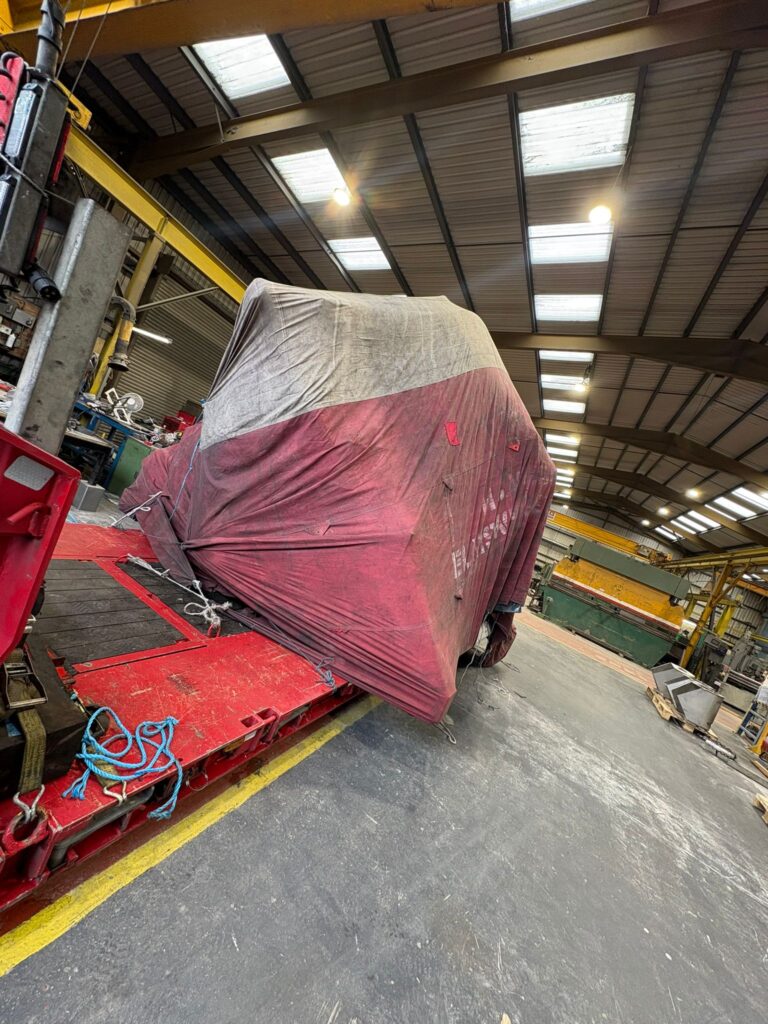
Large and Abnormal Loads

Transporting oversized cargo comes with a unique set of challenges. From securing the correct permits and escort vehicles to choosing the right route and trailer, there’s a lot to manage before the wheels even start turning.

Our team has handled everything from industrial machinery to oversized construction components, often using flat trailers and low loaders designed to safely carry heavy or awkwardly shaped loads. Every job is planned down to the last detail; we assess weight, vehicle capacity, and road restrictions to ensure a smooth journey from collection to delivery.

Because we operate throughout the UK and mainland Europe, we understand the cross-border requirements, including customs clearance and documentation. Whether it’s a one-off project or a regular movement, we make sure your goods travel safely and arrive without unnecessary delay.

Road Freight That Fits Your Business

Our Road Freight services cover full truckloads (FTL), part loads (LTL), and groupage, offering flexibility for all shipment sizes.

Why Clients Choose Future Forwarding

Every shipment matters, whether it’s a small pallet or a 50-ton machine. Our clients know they can rely on us for consistent communication, practical solutions, and an experienced team that genuinely cares about each delivery.

We combine the reach of a global network with the personal service of a dedicated logistics partner. That means real people planning your shipments, problem-solving when needed, and keeping you informed every step of the way.

Ready to Move?

If you’re planning a complex shipment or need help transporting large or abnormal loads across the UK or Europe, our Road Freight Department is ready to help.

To request a quote or speak to one of our freight specialists.

U.S. Airport Flight Reductions – Impacts on Air Freight

Date: November 7, 2025

Several major U.S. airports are reducing domestic flight schedules due to the ongoing federal government shutdown. The shutdown has caused staffing and operational limitations at the Federal Aviation Administration, leading to phased reductions in air traffic. This situation is affecting both passenger and cargo flights, creating new challenges for air freight capacity and timely shipment delivery.

Airports Most Impacted

  • Hartsfield–Jackson Atlanta International Airport – reductions affecting domestic cargo schedules.
  • Los Angeles International Airport – flight cuts may impact air freight connections and capacity.
  • Chicago O’Hare International Airport – schedule adjustments could extend transit times for both domestic and connecting cargo.
  • John F. Kennedy International Airport, New York – phased reductions impacting major cargo volumes.
  • Other major hubs – including Dallas/Fort Worth and Miami International Airport, are also experiencing operational adjustments.

Timelines and Scope

  • Flight reductions are implemented during peak operational hours, from early morning to late evening.
  • Initial reductions start at 4% of scheduled flights, with potential increases up to 10% depending on staffing and operational availability.

Impact on Air Freight Shipments

  • Air freight capacity may be limited, resulting in delayed shipments or rescheduled cargo flights.
  • If using major U.S. airports, allow for extended transit times.
  • Inland transport connections may be affected if air cargo arrives later than planned, impacting downstream distribution.

European Port Congestion

Date: November 7, 2025

European port congestion continues to affect global shipping, creating delays for vessel schedules, cargo handling, and inland transport. Shippers and logistics teams need to stay informed to manage potential disruptions effectively. Here’s the latest update on key European ports.

Antwerp

  • Yard utilization: ~75%
  • Following the suspension of a pilots’ strike, Antwerp continues to handle additional cargo volume redirected from Rotterdam. This increased activity may impact upcoming vessel operations. Shippers should monitor berth availability and plan for potential short-term delays.

Rotterdam

  • Yard utilization: 81–89%
  • Rotterdam remains the most affected port in northern Europe. Some carriers are omitting calls to catch up on schedules, resulting in longer transit times and potential cargo rollovers. Inland barge and rail services are also congested, adding to the challenges.

Hamburg

  • Yard utilization: ~75%
  • Overall operations are stable, but diverted cargo from other congested ports is creating mild pressure on capacity. Shippers should monitor updates to avoid unexpected delays.

Bremerhaven

  • Yard utilization: 75–85%
  • Yard space remains tight, particularly for transhipment cargo. Minor delays are expected, though operations remain manageable. Planning ahead for inland transport will help avoid further bottlenecks.

Managing European Port Congestion

  • Expect possible delays and longer container dwell times.
  • Consider alternative ports or feeder services to reduce risk.
  • Confirm bookings and schedules with carriers early.
  • Communicate with Future Forwarding to adjust plans proactively.

European port congestion is likely to persist in the near term. Proactive planning and close monitoring of yard utilization and vessel schedules are key to minimizing disruptions and maintaining a smooth supply chain.

Accurate Reporting of Section 232 Duties: A Vital Reminder for Steel & Aluminum Imports

In global trade, precision isn’t merely a best practice—it’s a compliance requirement. For importers handling steel and aluminum articles and their derivatives, the accurate reporting of Section 232 content and quantities under U.S. Customs and Border Protection (CBP) guidance remains critical. 

Why This Matters

The stakes are high when it comes to the duties under Section 232 of the Trade Expansion Act of 1962 covering steel and aluminum articles. Importers must ensure correct content valuation, proper classification, and detailed origin reporting. Missteps not only expose your organisation to unexpected costs and penalties, but can also create reputational risk in a compliance-sensitive environment. CBP expects full accuracy from the trade community—including those working with global freight forwarders like Future Forwarding—to uphold the integrity of U.S. trade-remedy regimes and safeguard supply-chain transparency.

Key Reporting Requirements

1. Proper Reporting of Steel & Aluminum Content

  • For goods classified under Chapter 73 (steel) or Chapter 76 (aluminum) of the HTS, the Section 232 duty is assessed only on the value of the steel or aluminum content.
  • If the value of the steel/aluminum portion is unknown or is the same as the entered value, you must report the duty based on the entire entered value and do this on a single entry line.
  • If the steel/aluminum content value is less than the entered value, you must split the entry: one line for the non-steel/aluminum portion, one line for the steel/aluminum portion—using the correct HTS classifications and quantities.
  • Critically: do not duplicate quantities when splitting lines for content reporting.

2. Melt, Pour, Smelt & Cast Origin Reporting

  • For steel articles, importers must report the country of melt and pour using the ISO country code. For derivatives, report the ISO code of the country of melt, or use “OTH” when applicable.
  • For aluminum articles, you must report the primary country of smelt, secondary country of smelt, or most recent country of cast, using ISO codes. Filers must report a “Y” indicator for primary or secondary.
  • Aluminum manufactured solely from recycled aluminum must have underlying manufacturing documentation available upon request.

3. Foreign Trade Zone (FTZ) Entries

  • Steel and aluminum articles admitted into a U.S. FTZ must be granted “privileged foreign status” and reported under the correct HTS classification.
  • Smelt and cast origin-reporting rules apply to aluminum goods admitted into an FTZ and later withdrawn for consumption.

4. Duties for Aluminum from Russia

  • The 200 percent duty on aluminum products and derivative aluminum products from Russia remains in effect. These duties apply to the entire value of the imported good.

5. Application of Reciprocal Tariffs

  • When you separate non-steel/aluminum content on its own line, that portion is subject to the reciprocal tariffs under HTS 9903.01.25.
  • The steel/aluminum content that is subject to Section 232 duties is not subject to reciprocal tariffs under HTS 9903.01.33.

6. Reporting Entry Summary Lines with Multiple HTS Numbers

  • If an entry summary line lists multiple HTS numbers, you must ensure that duties are properly associated with the correct HTS numbers.
  • You cannot combine duties across several HTS numbers and report them under only one classification.

Tips for Staying Compliant

  • Validate content valuations — Work closely with your suppliers or internal teams to determine the steel or aluminum portion value early in the importing process.
  • Train entry-summary teams — Ensure your staff know when to split entry lines, how to select the correct HTS, and how to report melt / smelt / cast origin codes.
  • Leverage your forwarder or customs broker — A knowledgeable partner like Future Forwarding can help identify potential pitfalls ahead of time and ensure the correct handling, especially for complex goods or FTZ entries.
  • Document everything — Keep proof of supplier values, origin codes, manufacturing documentation (especially for recycled aluminum), and entry-summary line logic. In the event of a CBP review, meticulous documentation strengthens your position.
  • Review shipments from high-risk jurisdictions — Especially for aluminum from Russia or goods requiring FTZ treatment.
  • Stay abreast of CSMS updates — CBP regularly issues clarifications, and maintaining proactive monitoring of CSMS guidance reduces surprise exposure.

Accurate reporting of Section 232 duties for steel and aluminum isn’t optional—it’s foundational. For importers and their logistics partners, the detailed obligations around content values, origin reporting, FTZ treatment, and separate handling of non-steel/aluminum content are non-negotiable. Future Forwarding remains committed to providing expert guidance and operational support to help you navigate these requirements with confidence and precision.

The New Lumber Tariff Landscape: What Section 232 Wood Products Tariffs Mean for Your Supply Chain

The recent implementation of Section 232 tariffs on timber, lumber, and derivative wood products marks a significant shift in global trade policy that will impact supply chains across multiple industries.

Understanding the New Tariff Structure

President Trump’s recent proclamation under Section 232 of the Trade Expansion Act of 1962 has introduced a comprehensive tariff framework targeting wood product imports. The policy establishes several key duty rates that businesses must navigate:

A baseline ten percent global tariff now applies to softwood lumber imports. For manufacturers and distributors working with upholstered furniture, a twenty-five percent global tariff has been implemented, with an increase to thirty percent scheduled for January 1. Kitchen cabinets and vanities face similar initial rates of twenty-five percent, though these will escalate more dramatically to fifty percent at the start of the new year.

Regional Variations: Advantages for Strategic Trading Partners

Not all markets face identical treatment under this framework. The United Kingdom, European Union, and Japan benefit from more favorable arrangements that reflect their existing trade relationships with the United States.

For businesses importing from the UK, the Section 232 tariff ceiling is set at ten percent. Companies sourcing from the EU or Japan should note that their combined Section 232 and most-favored nation tariffs will not surpass fifteen percent. These distinctions create meaningful opportunities for logistics optimization and strategic sourcing decisions.

Implications for Your Business

These tariff adjustments will create ripple effects across numerous sectors that depend on wood products as inputs. Construction companies, furniture manufacturers, cabinet makers, and retailers will all need to reassess their sourcing strategies and cost structures.

The escalating tariff rates on upholstered furniture, kitchen cabinets, and vanities present particular planning challenges. Businesses have a narrow window before January 1 to finalize shipments at the lower initial rates, making timing and logistics coordination critical.

Strategic Considerations for Supply Chain Management

Forward-thinking businesses should consider several tactical approaches in response to this evolving landscape:

Evaluate sourcing geography carefully. The preferential treatment afforded to UK, EU, and Japanese suppliers may make these origins more cost-effective than previously competitive alternatives. Your freight forwarding partner can help model total landed costs across different sourcing scenarios.

Accelerate critical shipments strategically. For products facing January 1 tariff increases, expedited ocean or air freight solutions may deliver significant cost savings by clearing customs before the higher rates take effect.

Assess domestic alternatives. With the stated goal of encouraging domestic production and the acknowledgment that US capacity could theoretically meet ninety-five percent of softwood demand, new domestic supply relationships may emerge as the market adjusts.

Build flexibility into contracts. The reference to ongoing negotiations and potential alternatives for trading partners suggests the tariff landscape will continue evolving. Sourcing agreements with flexibility provisions can help manage uncertainty.

Need help assessing how the lumber tariffs impact your specific supply chain? Contact our team today.

For a call back get in touch:

Contact Us

Ⓒ Future Forwarding 2025. All rights reserved.
Terms of use | Privacy policy | Sitemap | Web Design by Cocoonfx